
01
Heating or pouring?
Choose an electric gooseneck if you want to heat water and pour from the same vessel. A manual model suits an existing hot-water setup; check its specific heating instructions before putting it on any cooktop.
THE POUR-OVER COLLECTION
A narrow spout helps you direct water over the coffee bed. Choose an electric kettle to heat and pour, or check the approved heating method for a manual model.

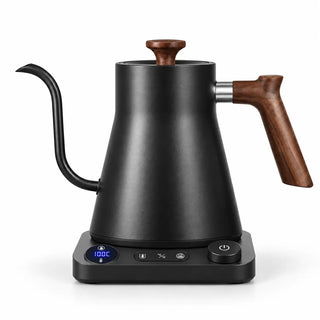
0.9L, Variable Temperature (104–212°F), Keep Warm, 1200W, for Pour-Over

350/600ml, Induction Compatible, Stainless Steel, Wood-Style Handle

350/600ml (12/20oz), Gas & Electric Stovetop, 304 Stainless Steel Interior

360/600ml, Wooden Handle, Slim Curved Spout, Non-Electric

0.8L, Temperature Control, Brew Timer, 2-Hour Keep Warm, Wood Handle

1L, Temperature Dial (104–212°F), 24-Hour Keep Warm, 1200W
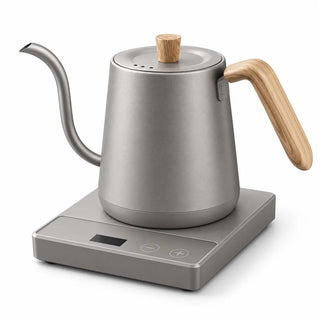
800ml, Touch Control, Coffee & Tea Presets, 12-Hour Keep Warm, 1000W
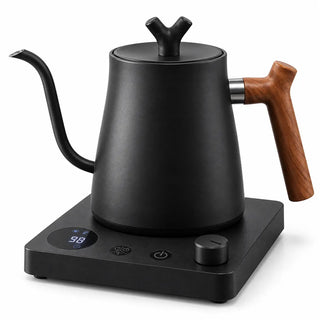
1L, Temperature Dial, Digital Display, Wood-Grain Handle
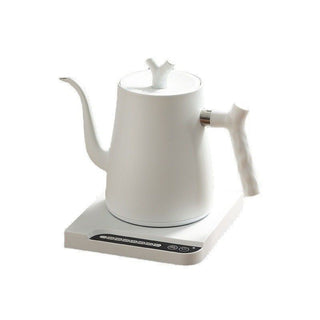
1L, 7 Temperature Presets, Keep Warm, 304 Stainless Steel Interior

350/600ml (12/20oz), Stovetop Borosilicate, 5mm Spout


Compare electric gooseneck kettles with temperature controls and manual pouring kettles. Choose the capacity, controls and heating method listed for the exact model. Use electric models on their supplied base; follow each manual kettle’s instructions before using a cooktop.
Compare models
Start with how you heat water, then choose the capacity and controls your recipe needs. Follow the individual product’s heating instructions; manual kettles do not all share the same cooktop compatibility.
| Model | Capacity | Temperature control | Heating and use |
|---|---|---|---|
| 0.9 L electric gooseneck kettle | 0.9 L / 900 ml | Adjustable 40–100°C; °C/°F display; keep-warm control | Supplied electric base only; 100–240 V. |
| Wood-style-handle kettle | 350 or 600 ml | No built-in temperature control | Compatible electric or induction cooktop; no gas or open flame. |
| White precision-pour kettle | 350 or 600 ml | Manual; internal water markings | Check heat-source compatibility. Direct induction requires a suitable adapter. |
| Wooden-handle pouring kettle | 360 or 600 ml | No electric base or temperature controls | Add separately heated water; designed for manual pouring. |
| 0.8 L electric kettle with brew timer | 0.8 L / 800 ml | 40–95°C plus boil function; 2-hour hold; built-in brew timer | Supplied digital base only; 1200 W. |
| 1 L electric gooseneck kettle | 1 L / 1000 ml | 40–100°C rotary dial (±2°C); keep-warm 1–24 hours | Supplied control base only; 1200 W. |
| 800 ml electric kettle with touch controls | 800 ml | 45–95°C; 85°C coffee preset; keep-warm up to 12 hours | Supplied control base only; 1000 W. Titanium Silver, White or Black. |
| 1 L electric kettle, wood-grain handle | 1 L / 1000 ml | Rotary dial with digital display; stops at boil | Supplied powered base only; global voltage compatibility. |
| 1 L electric kettle with seven presets | 1 L / 1000 ml | Seven temperature settings: 45, 55, 65, 75, 85, 95 and 100°C; keep-warm control | Use the supplied electric base. Check the unit’s voltage rating before use. |
Capacity is the listed vessel size, not a guaranteed brew yield. Leave headroom, follow fill markings and allow extra water for rinsing your filter. Open a model’s product page for current variants, price and availability.
01
Choose an electric gooseneck if you want to heat water and pour from the same vessel. A manual model suits an existing hot-water setup; check its specific heating instructions before putting it on any cooktop.
02
350–360 ml manual kettles suit a single cup. A 600 ml vessel gives more working volume, while the 0.8–1 L electric models leave room for two-cup brews and filter rinsing. Match the kettle to your recipe’s water weight, not just the number of cups.
03
Adjustable electric controls help you repeat a chosen recipe; depending on the model you also get a brew timer, a coffee preset or a long keep-warm. Manual kettles have no built-in temperature control, so heat water separately to your recipe.
Place your dripper and cup or server on a scale, rinse the paper filter and weigh your coffee. Heat water according to your recipe, wet the grounds evenly, then pour in small, controlled circles. Keep the spout close enough for a steady stream without touching the coffee bed. Change one variable at a time when adjusting your next brew.
Read the electric kettle and pouring guide →You can make pour-over coffee with a regular kettle. A gooseneck spout makes it easier to direct a small stream and adjust your pour rate, especially when wetting the grounds and making repeated circular pours. It helps with control, but does not replace a suitable grind, recipe and coffee-to-water ratio.
An electric gooseneck kettle heats water on its powered base. The electric models in this collection also offer temperature controls. A manual kettle has no electric base: some models allow a specified cooktop, while others are pouring vessels for separately heated water. Check the exact product’s instructions.
Choose around the water needed for your recipe, plus filter rinsing. The 350 or 360 ml options suit one cup; 600 ml gives more working volume; the 0.8, 0.9 and 1 L electric models suit two-cup brews or back-to-back pours. Listed capacity is not the same as safe usable fill volume: leave headroom and respect fill markings.
Compatibility varies by model. The 350/600 ml wood-style-handle kettle lists compatible electric and induction cooktops, but excludes gas and open flame. The white precision-pour model requires a suitable adapter for induction. The 360/600 ml wooden-handle model is for separately heated water. Electric kettles must use their supplied base.
Many pour-over recipes start around 90–96°C (194–205°F): lighter roasts often suit the higher end, darker roasts the lower end. An electric kettle with adjustable temperature lets you repeat a setting you like. The 0.9 L and 1 L models adjust from 40–100°C, the 0.8 L model from 40–95°C with a separate boil function, and the 800 ml model from 45–95°C.
Allow the kettle to cool, rinse the interior and wipe the exterior with a soft cloth. Dry before storage and follow the supplied instructions for descaling. Keep electric bases and contacts dry, avoid abrasive cleaners and do not soak wooden or wood-style handles.