Choose a manual or electric burr coffee grinder for your brewer, dose and daily routine. Compare hand grinders, USB-C rechargeable models and countertop options by adjustment range, bean capacity and power source.
For espresso, check fine adjustment and the requirements of your machine and basket. For pour-over or travel, compare grounds transfer, size and charging needs. Our portable grinder-and-brewer set needs a separate supply of hot water. Use the model links below to check full specifications, and pair your grinder with a coffee scale to weigh your dose.
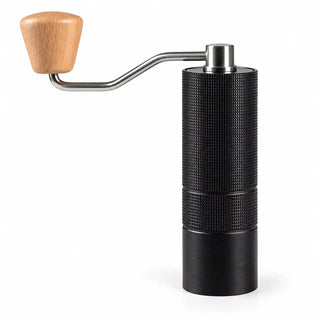
40 de setări, cuțit de măcinare din oțel inoxidabil, mâner pliabil, râșniță portabilă pentru călătorii
339,00 lei
Start with how and where you brew
Choose your power source first, then compare grind adjustment, bean capacity and the way you transfer grounds. More numbered settings alone do not guarantee better coffee or espresso compatibility.
Espresso at home
Look for fine adjustment and a workflow that fits your basket. The 60-setting model adds timed dosing and lists 51 mm and 58 mm portafilter setups; check clearance and support fit before ordering. Dial-in results depend on your beans, basket and machine.
Pour-over & everyday brewing
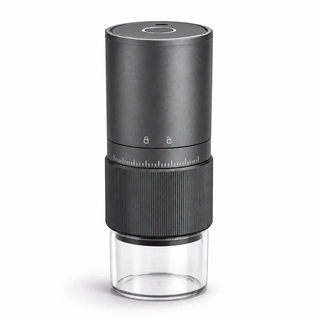
Use your brewer’s requirements as the starting point, then compare the grinder’s adjustment range, dose capacity and grounds cup. A pour-over grinder does not need to share the setting numbers of an espresso grinder. The M20L lists a power adapter and approximately 20 g bean capacity; rechargeable models need charging.
Travel & small spaces
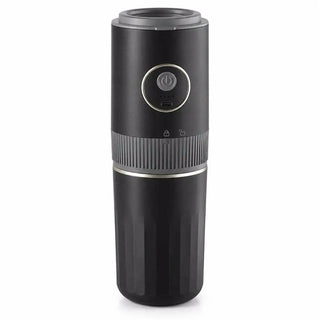
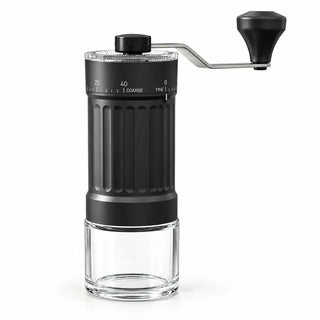
Choose a hand grinder when you want to grind without charging. The 7-Star has a foldable handle; the ceramic manual model collects grounds in glass. For electric grinding and brewing in one stack, the portable kit includes a filter and cup, but needs hot water supplied separately.
Compare Yozcoffee coffee grinders
Compare the linked models by grind adjustment, burr format, power source and capacity. Models without a summarized row link directly to their full specifications. Product cards show current prices and availability.
Hopper capacity is the maximum bean load, not a required brewing dose. Grounds-cup volume and bean weight are different measurements. Battery runtime varies with beans, dose and grind setting. Check the product page for full specifications. Ask about a grinder
Dial in one change at a time
Choose a starting grind
Use your model’s guide: fine for espresso, medium-fine to medium for pour-over, and coarse for French press or cold brew. These are starting points, not universal setting numbers.
Weigh your beans
Measure a dose that suits your recipe and stays within the hopper capacity. Keep dose and water quantity consistent when comparing grind changes.
Brew & observe
Watch flow and brew time, then taste. If a pour-over drains too quickly and tastes thin, try a little finer. If it stalls, try coarser. Temperature, pouring and filters also affect the result.
Record & keep clean
Note your setting and recipe. Brush out loose grounds after use, keep the burr chamber dry and disconnect powered models before cleaning. Follow the model’s care instructions.
Coffee grinder questions, answered
Should I choose a manual or an electric coffee grinder?
Choose manual grinding if you want to brew without electricity or charging and do not mind hand cranking. Electric grinding reduces hand effort. Rechargeable models need charging; the M20L uses a power adapter. Compare the dose capacity and grounds-transfer workflow as well as the power source.
What is the difference between a burr grinder and a blade grinder?
A burr grinder passes beans between grinding surfaces with an adjustable gap. A blade grinder chops beans with a spinning blade. Burr adjustment gives you a more controlled starting point for repeating and refining a brew recipe; it does not mean every particle is identical.
Can these coffee grinders grind for espresso?
Check the model’s stated fine-grind range and the requirements of your espresso machine and basket. A listed espresso starting range does not guarantee precise dial-in for every non-pressurized basket. The 60-setting model doses by time and lists 51 mm and 58 mm portafilter setups; confirm support fit and clearance and use a separate scale to weigh the grounds.
Do 60 grind settings make a grinder better than 40 settings?
Not necessarily. Setting counts do not tell you the size of each adjustment, the usable grind range or the result with your beans. Compare the burr, adjustment range, capacity and workflow. Setting 15 on one model should not be treated as the same grind size on another.
Does the portable grinder and brewer heat water?
No. Its battery powers the grinder only. The kit combines adjustable electric grinding, a reusable filter and a 350 ml cup. Supply hot water separately and remove the powered grinder section before pouring. It brews by manual pour-over and does not make pressure-brewed espresso.
How should I clean a coffee grinder?
Empty the beans and grounds, disconnect powered models and use a dry, soft brush on accessible burr surfaces and outlets. Keep the motor, charging port and burr chamber dry. Wash only removable parts permitted by the model’s care instructions and dry them fully before reassembly.
Build a more repeatable coffee routine
Read the model-specific guides, learn how to clean your burrs and pair your grinder with the rest of your setup.