
コーヒーと水
両方の重量を記録します。比率は、粉の重量に対してどれだけ水を使うかを表します。エスプレッソでは、水の代わりにカップ内の抽出液の重量を記録してください。
Yozcoffee / ガイド
おいしいコーヒーは、繰り返し再現できるレシピから始まります。淹れ方を選び、材料を量り、酸味や苦味が強い、濃すぎると感じたときの調整方法を学びましょう。ハンドドリップ、エスプレッソ、浸漬式の水出しを解説し、滴下式も別に紹介します。
早見表
朝の抽出を手作業で楽しむならハンドドリップ、少量で濃厚な一杯ならエスプレッソ、まとめて作り置きするなら浸漬式の水出しを選びましょう。以下の基本レシピを比較してください。ハンドドリップと水出しは注ぐ水の量、エスプレッソはカップに抽出された飲み物の量を計ります。
| 抽出方法 | コーヒーと液体 | 挽き目と時間 | 対象の器具 |
|---|---|---|---|
| ハンドドリップ | 粉15g+注ぐ水250g 約1:16.7 |
中細挽き、約2½分 | ペーパーフィルターを使う手動の円錐ドリッパー |
| エスプレッソ | 粉18g→抽出液36g 1:2、粉18gが入るバスケットの場合 |
細挽き、約25〜30秒を目安に | コーヒー粉を使う一般的なエスプレッソマシン |
| 濃縮水出しコーヒー | 粉284g+注ぐ水1,200ml 約1:4.2 |
粗挽き、参照する常温抽出の方法では12〜24時間 | 浸漬式の器具で抽出し、その後薄める |
レシピは出発点として、豆や好みに合わせて調整してください。始める前に器具の容量と説明書を確認しましょう。
自分流にアレンジしよう
コーヒーの粉の量と、コーヒーに対する水の比率を選択してください。表示される数値は、抽出完了後の重量ではなく、蒸らしに使う湯量を含めた加えるべき水の総量です。
コーヒー粉15gに対してお湯250gから始めてください。抽出量に合わせて十分な大きさのドリッパーとサーバーを使用してください。抽出量を増やすと抽出時間が変わる場合があります。
ここから始める
両方の重量を記録します。比率は、粉の重量に対してどれだけ水を使うかを表します。エスプレッソでは、水の代わりにカップ内の抽出液の重量を記録してください。
使う豆と手順を揃えながら、適した挽き目を探しましょう。ミルが違えば、設定の数字はそのまま流用できません。
気に入った点と変えたい点を記録しましょう。粉量、挽き目、温度を同時に変えると、結果を判断しにくくなります。
01 / ハンドドリップ
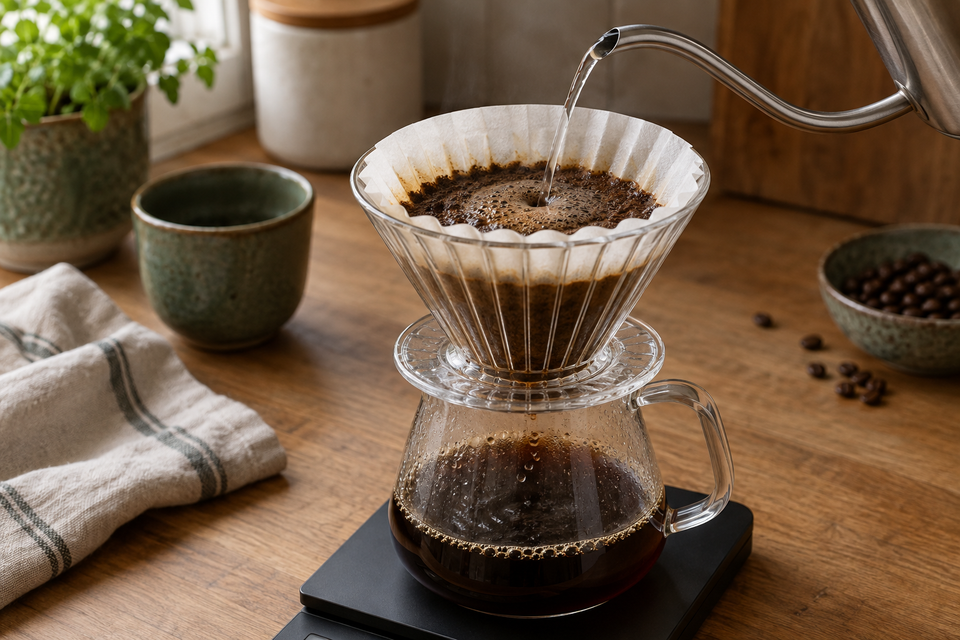
手動の円錐ドリッパーと、それに合うペーパーフィルターを使った一杯分のシンプルなレシピです。

自動ドリップ式や再利用可能なフィルターを使う場合は、器具の説明書を基本にしてください。
最初の注湯から時間を計ります。約2½分は目安で、必ず守る終了時刻ではありません。お湯が落ちなくなる場合は、少し粗い挽き目を試してください。ハンドドリップの参照元。
一定の湯量で注ぐには、細口ケトルが便利です。初めて器具を揃えるなら、ガラスドリッパーとサーバーのセットで主な二つの器具を揃えられます。対応するペーパーフィルターを選んでください。
02 / エスプレッソ
コーヒー粉を使う一般的なエスプレッソマシンと、適切なダブルバスケット向けです。

カプセル式や携帯用の器具では、粉量や手順が異なる場合があります。それぞれの説明書に従ってください。
約25〜30秒は参考になります。時間はマシン、プレインフュージョン、豆によって変わり、おいしさを保証するものではありません。タイマーにプレインフュージョンの時間を含めるかどうかも記録してください。エスプレッソの参照元。
粉にダマがあるときは、WDTツールでタンピング前に均一にほぐせます。粉量と抽出量を揃えながら、均一な粉層を目指しましょう。
03 / 浸漬式の水出し
粗挽きの粉を水に浸してからろ過し、好みの濃さに薄めます。器具本体とフィルターバスケットの両方に合うレシピを選んでください。

ミルクは飲む直前まで別にしておきます。滴下式には、この浸漬方法ではなく流量を調節する専用レシピを使ってください。冷蔵庫での浸漬は別の方法で、時間も異なる場合があるため、その温度向けのレシピに従いましょう。水出しコーヒーの参照元。
少量を作り、粉の片付けを楽にしたいなら、フィルター付き水出しボトルが便利です。取り外せるバスケットに粉を入れられます。上の濃縮レシピ全量ではなく、そのボトルに推奨される粉量と注水上限を守ってください。
04 / 滴下式
ボトル内で粉を水に浸す代わりに、タワーから粉の層へ少しずつ水を落とします。
上の浸漬式レシピは、滴下式用ではありません。その浸漬時間や濃縮比率を、滴下式タワーの標準設定として使わないでください。
浸してろ過するシンプルな工程なら浸漬式を。抽出の様子を見ながら流量を調節するのが好きなら滴下式を選びましょう。
抽出中の調整を楽しむなら、流量調節式のガラス製コールドドリップメーカーで、別々のチャンバーを通る水の流れを観察できます。付属するレシピから始めてください。
自分好みに調整する
少し冷ましてから味を確かめましょう。粉量とレシピを揃え、一つだけ小さな変更を試します。焙煎度や水も味に影響します。
| 気になる点 | 次に試すこと |
|---|---|
| 刺激的な酸味・酸っぱさ | 温かい抽出では、同じレシピのまま挽き目を少し細かくしてみましょう。他の条件を変える前に味を比較してください。 |
| 苦味・口が乾くような渋さ | 挽き目を少し粗くしてみましょう。器具に古いコーヒーの汚れが残っていないかも確認してください。 |
| 濃すぎる | 出来上がったコーヒーに少し水を加えます。改善したら、次回のために薄めた量を記録してください。 |
| 毎回味が違う | 重量、挽き目、時間を確認しましょう。淹れるたびに短い記録を残してください。 |
役立つ情報
粉と水の比率を保ち、粉15gに水250g、18gに300g、30gに500gとします。多く淹れる場合は、十分な容量のドリッパーとサーバーが必要です。抽出時間もまったく同じになるとは限りません。
いいえ。粉やフィルターに水分が残るため、飲み物の重量は注いだ水より少なくなります。そのため、ハンドドリップの注湯量の比率と、エスプレッソの抽出液量の比率は直接比較できません。
いいえ。浸漬式は粉を水に浸し、滴下式は粉層に少しずつ水を通します。アイスコーヒーは、温かく淹れたコーヒーを氷の上に注いで作ることもできます。淹れ方に合うレシピを使ってください。
濃さはちょうどよくても酸味や渋さが気になるなら、比率を固定して挽き目を少し調整します。味はよくても濃すぎるなら、まず出来上がったコーヒーを薄めてみましょう。次の条件を変える前に結果を記録してください。
記録する項目:抽出方法・豆の名前・粉量・注湯量または抽出液量・挽き目の設定・湯温・時間・味・次回変える点一つ。
記録例:「ハンドドリップ、15g / 250g、自分のミルの設定18、94°C、2:45、やや酸味が強い。次は一段階細かくする」。設定値は自分用の目安で、別のミルへの推奨値ではありません。
今日のレシピを変える前に、昨日のコーヒー汚れを落としましょう。
普段淹れる量に合わせて、手動ハンドドリップのレシピを調整できます。
六種類の抽出方法で、挽き目の目安を比較できます。
発行:Yozcoffee。レシピは以下のメーカーのガイドを参考に構成しています。容量、準備、お手入れは、ご自身の器具の説明書に従ってください。
参照レシピは、学習用にまとめた一般的な出発点です。お使いの器具の説明書を優先してください。
Hario:ハンドドリップの方法Breville:エスプレッソのレシピOXO:浸漬式の水出し更新日 · Yozcoffee