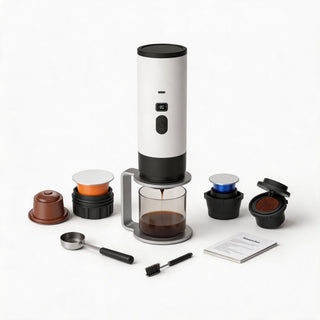
Choose a portable espresso maker by coffee format first: capsules for less loose-ground handling, a ground-coffee basket for your own beans, or a manual pump if you prefer a device without a battery. Then check how you will heat the water, power the brewer and clean it. For a full mug of filter coffee, compare a dripper before buying a short-shot brewer.
Already own a brewer? The capsules-or-grounds walkthrough covers charging, dosing and cleaning. The travel and office guide explains how to set it up away from home.
Quick picks: which type fits which trip
- Least fuss, capsules already on hand: the white USB-C brewer. Seat an NS Original-style capsule or a scoop of grounds, add hot water from the kettle, press the button. Suits hotel rooms and shared desks where a hot-water dispenser already exists.
- Your own beans, a bigger dose, fewer loose parts: the black 2-in-1 brewer. The 51 mm basket takes about 13 g, the cup retracts into the body, and the carry case keeps the capsule adapter with the machine. Suits road trips and campsites where the whole kit rides in one bag.
- You want to watch the shot and tune it: a hand-pump model such as the Picopresso. Nothing to charge, an 18 g basket, and a workflow that rewards practice. Suits people who already dial in espresso at home.
- You drink a full mug, not a shot: skip espresso pressure and take the portable grinder and pour-over brewer instead. The filter-coffee section below explains why.
Every option here needs water heated somewhere else. Where that water comes from says more about how the trip will go than any pressure figure on the box.
Start with three questions
- What coffee will you use? Grounds, one specific capsule format, or both?
- Where does hot water come from? A kettle, a thermos, an office dispenser, or a heater you have actually confirmed the model has?
- How much work will you repeat every morning? Grinding, dosing, pressing, rinsing and drying all count. Include cleanup when you estimate the time needed.
Check whether electricity powers a pump, a heater or both. A temperature display does not establish a heating function. Confirm this for the exact model before planning water for the trip.
For capsules or grounds: the white USB-C brewer
The Yozcoffee portable capsule and ground-coffee maker takes compatible NS Original-style capsules or coffee in its reusable grounds basket, charges over USB-C, and shows battery level and water temperature on a small display.

It does not heat water. Pour in water that is already hot. The body measures 65 × 240 mm, so hold that shape against the pocket or drawer you plan to use rather than judging bulk from a product photo. Day-to-day handling and the accessory list are covered in the capsules-or-grounds walkthrough.
The capsule and ground-coffee options suit different routines. Check capsule dimensions and format carefully, and allow a separate method for milk if the brewer has no wand.
For a 51 mm grounds basket: the black 2-in-1 brewer
The black 2-in-1 portable espresso maker uses a 51 mm grounds basket, comes with a Nespresso-compatible capsule adapter, and has a retractable cup built into the body. Its instructions suggest starting near 13 g of ground coffee, within a basket capacity of roughly 14 g, with water filled to the 100 ml (3.4 fl oz) line. A 1500 mAh battery charges over USB-C in about three hours, and the product guide quotes up to 60 extraction cycles per charge under its test conditions, so plan on fewer in the cold or with a heavy dose. A carry case is included, which matters more than it sounds once the adapter, basket and cable are all in the same bag.

Read this model's water and charging instructions separately. A similar-looking brewer may have a different tank, heating function or operating sequence.
For manual pumping: compare the Picopresso workflow
As a manufacturer-documented reference point, the Wacaco Picopresso pumps by hand, holds an 18 g basket and an 80 ml water chamber, and — in Wacaco's own words — does not heat water. The open bottomless portafilter lets you watch the extraction, and the manufacturer is explicit that grind and technique need dialing in.
Manual pumping adds an active step to the morning. Try the process at home and decide whether you want to repeat it while traveling.
Specs side by side
| Spec | White USB-C brewer | Black 2-in-1 brewer | Wacaco Picopresso |
|---|---|---|---|
| Coffee format | NS Original-style capsules or ground coffee in the reusable basket | Ground coffee in a 51 mm basket, or Nespresso-compatible capsules through the adapter | Ground coffee only |
| Heats water? | No. Add preheated water | No heater listed. Plan on preheated water | No, per the manufacturer |
| Power | USB-C rechargeable pump | 1500 mAh USB-C battery, about 3 h to charge, up to 60 cycles per charge (product guide figure) | Manual hand pump, nothing to charge |
| Grounds dose | Included basket and scoop; follow the basket's fill line | About 13 g; basket holds roughly 14 g | 18 g basket |
| Water per brew | Fill line on the brewer; follow the manual | 100 ml (3.4 fl oz) marked line | 80 ml (2.7 fl oz) chamber |
| Cup included | No. Bring a cup | Yes, retractable, stores on the body | No |
| Size | 65 × 240 mm (2.56 × 9.45 in) | About 21 cm (8.28 in) tall | See the manufacturer page |
| Still need to pack | Capsules or grounds, cup, hot water | Grounds or capsules, hot water | Grounds (and a grinder unless pre-ground), cup, hot water |
The two Yozcoffee models use specifications from their product pages; the Picopresso figures come from Wacaco. Include the items in the “still need to pack” row when comparing packed size and weight.
Check the first morning away before you buy
List the required items for your coffee format
For capsules, check the exact holder and capsule availability. For grounds, include a dose container or a grinder suitable for the basket. Follow the portable basket's own fill instructions; a dose from a countertop machine may be too large.
Test water, power and cleaning together
Prepare a complete drink with the equipment you intend to carry. Note whether the water is supplied hot, which parts need power and where wet parts can dry afterward. An integrated cup may save one item, but the whole kit still needs to fit the bag and the facilities at the destination.
Compare the whole travel kit
| Check | Why it matters |
|---|---|
| Coffee format | Decides whether you carry capsules, pre-ground portions or a grinder |
| Water heating | A pump-powered brewer still needs a kettle or a hot-water flask |
| Battery or manual effort | Changes the charging plan, and what you do on day four with no outlet |
| Basket and water capacity | Sets the serving size and how many cycles a mug takes |
| Loose components | Adapters, baskets and seals need space and something to keep them together |
| Cleaning access | Decides whether the kit works with the sink and drying space you will actually have |
Apply these checks to the trips you usually take. The seven things to compare before buying a travel brewer covers filter brewers too. If you need a 550 ml travel kettle, confirm its power supply and permitted use at the destination.
Ground coffee or capsules?
Ground coffee gives you more choice of beans, but needs a suitable grind and dose. Use the basket's stated capacity and adjust the recipe without overfilling.
Capsules simplify dosing and cleanup. Pack the named compatible format and a way to collect the used capsules until you can dispose of them appropriately.
A repeatable routine away from home
- Charge the brewer and check the basket or adapter is in the bag before you leave.
- Sort the water source, then follow the model's own filling instructions.
- Weigh or scoop the grounds, or seat one compatible capsule.
- Assemble as instructed. Threads and seals should turn easily; if they do not, something is misaligned.
- Brew into a stable cup, hands clear of the outlet.
- Let the parts cool, then empty, rinse and dry them before packing.
With ground coffee, write down the dose and grinder setting before you change anything. A shot that runs fast or slow is information about grind, dose or distribution. It is not evidence that a machine advertising a bigger pressure figure would fix it — what a 20 bar rating actually describes is worth reading before that number influences a purchase.
When a filter-coffee setup is the better choice
If your normal drink is a 300 ml mug, a 40 ml espresso-style shot means running several cycles or diluting heavily, and neither is a good morning. A portable grinder and pour-over brewer takes a different route: grind electrically, pour hot water through the reusable filter, drink from the 350 ml cup it came with. It does not heat water and it makes no espresso pressure, which is the point.
Read the portable coffee maker versus travel espresso maker comparison before choosing on looks. Pick the drink first, then the device. The rest of the travel brewing range covers both sides of that split, and the compact machines sit on the espresso side.
Cleaning and packing
Keep powered bodies and charging ports dry. Rinse only the parts the manual approves for washing, dry them properly, and keep loose grounds away from the seals — residue can interfere with a proper seal.
Try filling, brewing, cleaning and packing the complete kit once. That trial will tell you whether the routine fits a normal travel morning.