Kaffee & Wasser
Notiere beide Gewichte. Ein Verhältnis beschreibt, wie viel Wasser du pro Gramm Kaffee verwendest. Bei Espresso notierst du stattdessen das Gewicht des Getränks in der Tasse.

Yozcoffee / Wissen
Besserer Kaffee beginnt mit einem Rezept, das du wiederholen kannst. Finde deine Methode, wiege deine Zutaten und lerne, was du ändern kannst, wenn eine Tasse sauer, bitter oder zu kräftig schmeckt. Diese Anleitungen behandeln Pour-over, Espresso und Cold Brew durch Immersion sowie eine separate Einführung in Cold Drip.
Auf einen Blick
Wähle Pour-over für eine Morgenroutine, bei der du selbst aufgießt, Espresso für eine kurze, konzentrierte Tasse oder Cold Brew durch Immersion für eine größere Menge, die du im Voraus zubereiten kannst. Vergleiche die folgenden Ausgangsrezepte: Bei Pour-over und Cold Brew wird das hinzugegebene Wasser gemessen, bei Espresso das Getränk in deiner Tasse.
| Methode | Kaffee & Flüssigkeit | Mahlgrad & Zeit | Geeignet für |
|---|---|---|---|
| Pour-over | 15 g Kaffee + 250 g hinzugegebenes Wasser Etwa 1:16,7 |
Mittelfein; etwa 2½ Minuten | Kegelförmiger Handfilter mit Papierfilter |
| Espresso | 18 g Kaffee → 36 g Getränk 1:2, wenn dein Sieb 18 g fasst |
Fein; als Richtwert etwa 25–30 Sekunden | Herkömmliche Espressomaschine für gemahlenen Kaffee |
| Cold-Brew-Konzentrat | 284 g Kaffee + 1.200 ml hinzugegebenes Wasser Etwa 1:4,2 |
Grob; 12–24 Stunden nach der beschriebenen Methode bei Raumtemperatur | Immersionsbereiter; den fertigen Kaffee anschließend verdünnen |
Betrachte diese Rezepte als Ausgangspunkte. Passe sie an deine Bohnen und deinen Geschmack an und prüfe vor Beginn das Fassungsvermögen und die Anweisungen deines Kaffeebereiters.
Passe das Rezept an deinen Geschmack an
Wähle deine Kaffeedosis und das Wasser-Kaffee-Verhältnis. Das Ergebnis ist die hinzuzufügende Wassermenge einschließlich des Vorquellens (Blooming) – nicht das Gewicht des fertigen Getränks.
Beginne mit 15 g Kaffee und 250 g Wasser. Verwende einen ausreichend großen Handfilter und eine ausreichend große Kanne für deine Brühmenge; die Brühzeit kann sich ändern, wenn du die Menge erhöhst.
Hier beginnen
Notiere beide Gewichte. Ein Verhältnis beschreibt, wie viel Wasser du pro Gramm Kaffee verwendest. Bei Espresso notierst du stattdessen das Gewicht des Getränks in der Tasse.
Verwende dieselben Bohnen und denselben Ablauf, während du einen passenden Mahlgrad findest. Zahlen auf verschiedenen Mühlen sind nicht direkt vergleichbar.
Notiere, was dir gefallen hat und was du ändern würdest. Wenn du Dosierung, Mahlgrad und Temperatur gleichzeitig änderst, lässt sich das Ergebnis schwerer beurteilen.
01 / Pour-over
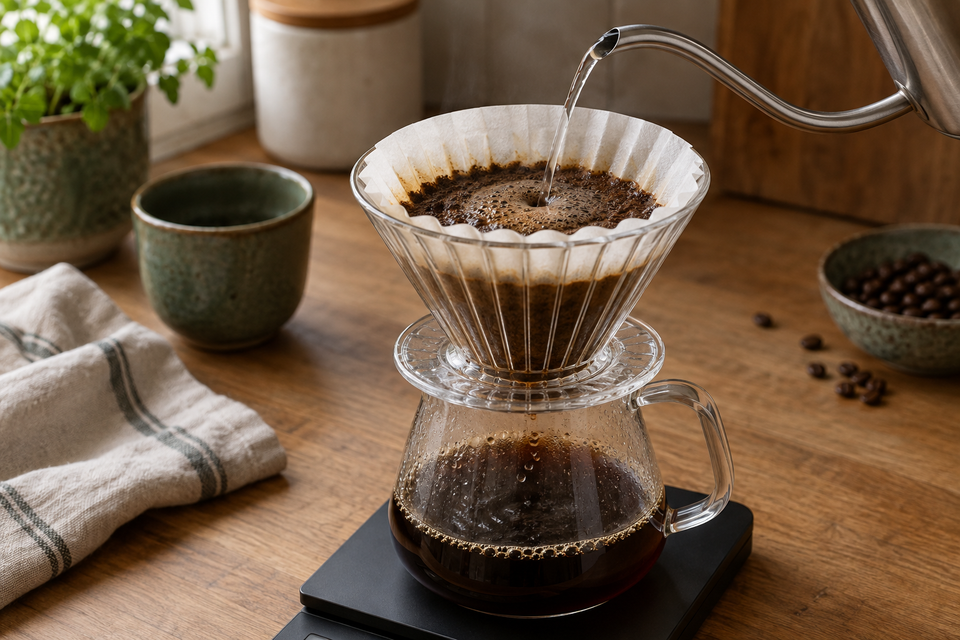
Ein einfaches Rezept für eine Tasse im kegelförmigen Handfilter mit passendem Papierfilter.

Bei automatischen Pour-over-Brühern oder wiederverwendbaren Filtern dienen die Geräteanweisungen als Ausgangspunkt.
Miss die Zeit ab dem ersten Aufguss. Etwa 2½ Minuten dienen als Orientierung; die passende Brühzeit kann variieren. Wenn der Durchfluss stockt, versuche es mit einer etwas gröberen Mahlung. Pour-over-Quelle.
Mit einem Schwanenhalskessel oder Schwanenhals-Wasserkocher lässt sich ein gleichmäßiger Wasserstrahl leichter kontrollieren. Wenn du deine erste Ausstattung zusammenstellst, bietet ein Set aus Glashandfilter und Kanne die beiden wichtigsten Teile; wähle passende Papierfilter.
02 / Espresso
Für eine herkömmliche Espressomaschine für gemahlenen Kaffee mit einem passenden Doppelsieb.

Kapsel- und tragbare Kaffeebereiter können eine andere Dosis und Zubereitung erfordern. Befolge deren Anweisungen.
Eine Bezugszeit von etwa 25–30 Sekunden kann als nützlicher Richtwert dienen. Die Zeit hängt von Maschine, Präinfusion und Kaffee ab; sie beweist nicht, dass der Shot gut schmeckt. Notiere, ob deine Zeitmessung die Präinfusion einschließt. Espresso-Quelle.
Wenn dein Kaffeepulver Klumpen bildet, kann ein WDT-Tool dabei helfen, es vor dem Tampen gleichmäßig zu verteilen. Behalte Kaffeemenge und Getränkemenge bei, während du an einem gleichmäßigen Kaffeebett arbeitest.
03 / Cold Brew durch Immersion
Lass grob gemahlenen Kaffee in Wasser ziehen, filtere ihn anschließend und verdünne ihn nach Geschmack. Wähle ein Rezept, das sowohl zu deinem Kaffeebereiter als auch zu seinem Filterkorb passt.

Gib die Milch erst beim Servieren hinzu. Befolge bei einem Cold-Drip-Bereiter das Rezept zur Durchflussregelung anstelle dieser Immersionsmethode. Das Ziehenlassen im Kühlschrank ist eine weitere Methode und kann eine andere Zeit erfordern; verwende ein Rezept für die Zubereitung bei dieser Temperatur. Cold-Brew-Quelle.
Für kleinere Mengen und ein einfaches Entfernen des Kaffeemehls eignet sich eine Cold-Brew-Flasche mit herausnehmbarem Filterkorb. Verwende die empfohlene Dosierung und Füllhöhe anstelle der oben genannten vollständigen Konzentratmenge.
04 / Cold Drip
Statt Kaffee in einer Flasche ziehen zu lassen, gibt ein Cold-Drip-Turm Wasser nach und nach durch ein Kaffeebett ab.
Das obige Immersionsrezept ist kein Cold-Drip-Rezept. Verwende die Ziehzeit oder das Konzentratverhältnis daraus nicht als Standard für einen Cold-Drip-Turm.
Wähle Immersion für einen einfachen Prozess aus Ziehenlassen und Filtern. Wähle Cold Drip, wenn du gerne beobachtest und den Durchfluss anpasst, während dein Kaffee brüht.
Wenn du die Zubereitung gerne während des Brühens anpasst, kannst du mit einem Cold-Drip-Bereiter aus Glas mit einstellbarem Durchfluss das Wasser durch separate Kammern verfolgen. Beginne mit dem für diesen Kaffeebereiter mitgelieferten Rezept.
Nach deinem Geschmack
Lass den Kaffee vor dem Probieren etwas abkühlen. Behalte Dosierung und Rezept bei und probiere dann eine kleine Änderung. Auch Röstung und Wasser können das Ergebnis beeinflussen.
| Was du bemerkst | Als Nächstes versuchen |
|---|---|
| Spitz oder sauer | Bei heißer Zubereitung kannst du es mit einem etwas feineren Mahlgrad bei gleicher Rezeptur versuchen. Vergleiche zuerst, bevor du etwas anderes änderst. |
| Bitter oder mit trockenem Mundgefühl | Versuche es mit einem etwas gröberen Mahlgrad. Prüfe auch, ob sich alte Rückstände an deiner Ausrüstung befinden. |
| Zu stark | Gib etwas Wasser zur fertigen Tasse hinzu. Wenn das hilft, notiere die Verdünnung für das nächste Mal. |
| Jedes Mal anders | Prüfe deine Gewichte, den Mahlgrad und die Zeit. Notiere für jeden Versuch kurz die Zubereitung. |
Nützliche Details
Behalte das Verhältnis von Kaffee zu Wasser bei: 15 g mit 250 g Wasser, 18 g mit 300 g oder 30 g mit 500 g. Für größere Mengen brauchst du einen Handfilter und eine Servierkanne mit ausreichendem Fassungsvermögen. Gehe nicht davon aus, dass die Zubereitung exakt genauso lange dauert.
Nein. Ein Teil des Wassers verbleibt im Kaffeemehl und Filter, daher wiegt das Getränk weniger als die hinzugefügte Wassermenge. Das Verhältnis von Kaffee zu Brühwasser beim Handaufguss lässt sich deshalb nicht direkt mit dem Verhältnis von Kaffeemehl zu fertigem Espresso vergleichen.
Nein. Beim Cold Brew durch Immersion zieht das Kaffeemehl im Wasser. Beim Cold Drip läuft das Wasser allmählich durch ein Kaffeebett. Iced Coffee kann heiß gebrühter Kaffee sein, der auf Eis serviert wird. Verwende ein Rezept, das für deine Methode entwickelt wurde.
Wenn die Stärke angenehm ist, der Geschmack aber spitz wirkt oder ein trockenes Mundgefühl hinterlässt, behalte das Verhältnis bei und passe den Mahlgrad leicht an. Wenn der Geschmack angenehm, aber zu intensiv ist, verdünne zuerst das fertige Getränk. Notiere das Ergebnis, bevor du die nächste Variable änderst.
Notiere: Methode · Kaffeesorte · Dosis · hinzugefügte Wassermenge oder Getränkemenge · Mahleinstellung · Wassertemperatur · Zeit · Geschmack · eine Änderung für das nächste Mal.
Beispielnotiz: „Pour-over, 15 g / 250 g, Stufe 18 an meiner Mühle, 94 °C, 2:45, etwas spitz. Nächster Brühvorgang: eine Stufe feiner.“ Die Einstellung ist ein persönlicher Referenzwert, keine Empfehlung für eine andere Mühle.
Entferne Kaffeerückstände vom Vortag, bevor du das heutige Rezept änderst.
Passe ein manuelles Pour-over-Rezept an deine übliche Menge an.
Vergleiche die Empfehlungen zum Mahlgrad für sechs Brühmethoden.
Veröffentlicht von Yozcoffee. Die Rezepte wurden anhand der unten aufgeführten Herstelleranleitungen angepasst. Befolge die Anleitung deines eigenen Kaffeebereiters zu Fassungsvermögen, Aufbau und Pflege.
Rezeptreferenzen: allgemeine Ausgangspunkte, zum Lernen angepasst. Die Anleitung deines Geräts hat Vorrang.
Hario: Pour-over-MethodeBreville: Espresso-RezeptOXO: Cold Brew durch ImmersionAktualisiert · Yozcoffee