Stekker eruit en laten afkoelen
Haal elektrische apparaten van de stroomvoorziening en laat hete onderdelen afkoelen. Houd motoren, oplaadaansluitingen, stekkers en elektrische voeten droog.

Yozcoffee / Leren
Leeg het koffieresidu. Maak de juiste onderdelen schoon. Laat ze drogen. Zoek een eenvoudige onderhoudsroutine voor je koffiemolen, koffiezetapparaat en waterkoker.
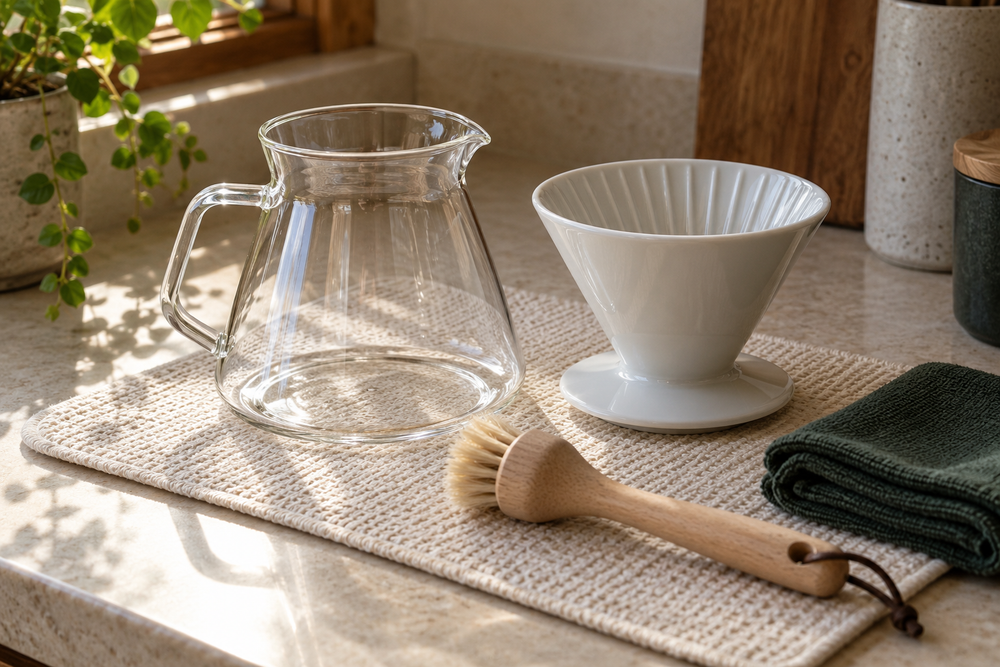
Controleer eerst het onderdeel
Een uitneembaar onderdeel is niet automatisch afwasbaar. Controleer de aanwijzingen in de handleiding voor dat specifieke onderdeel, inclusief afdichtingen, coating en elektrische aansluitingen.
| Onderdeel | Eerste stap | Controleer voordat je verdergaat |
|---|---|---|
| Maalwerk en maalruimte | Haal de stekker eruit en verwijder bereikbare resten met een droge borstel. | Of het maalwerk mag worden verwijderd of gewassen; ga daar niet zomaar van uit. |
| Uitneembare kan, filter en opvangbak voor gemalen koffie | Alleen als de handleiding dit uitdrukkelijk toestaat met de hand wassen, naspoelen en volledig laten drogen. | Materiaal, coating, afdichtingen en aanwijzingen over vaatwasserbestendigheid. |
| Elektrische waterkoker | Veeg de buitenkant af en gebruik de toegestane methode voor reiniging van de binnenkant. | Geschikte ontkalker, verdunning en spoelstappen. Nooit onderdompelen. |
| Motor, elektrische voet en oplaadaansluiting | Droog houden. Volg de aanwijzingen van de fabrikant voor reiniging van de buitenkant. | Niet afspoelen, weken of in de vaatwasser doen. |
Enkele basisregels
Haal elektrische apparaten van de stroomvoorziening en laat hete onderdelen afkoelen. Houd motoren, oplaadaansluitingen, stekkers en elektrische voeten droog.
Haal alleen onderdelen los die voor reiniging door de gebruiker zijn bedoeld. Vaatwasserbestendigheid, weken en reinigingsmiddelen hangen af van het exacte product.
Gebruik een zachte borstel of een zachte doek. Vermijd schuursponsjes op bewerkte oppervlakken en laat afwasbare onderdelen volledig drogen vóór het in elkaar zetten.
Koffiemolens
Oude koffieresten en koffieoliën kunnen zich ophopen bij het maalwerk en in de uitloop.
Spoel de motorbehuizing niet af en ga er niet van uit dat het maalwerk mag worden gewassen. Gebruik reinigingstabletten voor molens alleen als ze voor jouw model zijn toegestaan. Stop als een onderdeel niet makkelijk loslaat. Bron over onderhoud van molens.
Koffiezetters, kannen en filters
Let op de plekken waar koffie achterblijft: filter, kan, deksel en uitneembare afdichtingen.
Vermijd plotselinge temperatuurwisselingen bij glas. Automatische koffiezetters kunnen elektronica bevatten, ook als ze eruitzien als een handmatige filterzetter. Dompel het gemonteerde apparaat niet onder.

Vind jouw zetter
Gooi koffie weg bij het restafval of, als dat lokaal mag, bij het gft. Reinig het zeefje van de plunjer en de rand. Scheid filterlagen alleen volgens de handleiding en laat drogen vóór het in elkaar zetten.
Reinig na elke bereiding. Controleer filter, deksel, schenktuit en bereikbare afdichtingen. Volg voor kleppen en kranen de handleiding.
Gooi het papieren filter weg en reinig afwasbare onderdelen. Laat alles volledig drogen vóór het inpakken. Houd elektrische onderdelen en oplaadaansluitingen droog.
Waterkokers
Ontkalken verwijdert minerale aanslag die door water ontstaat. Volg de aanwijzingen van jouw waterkoker over reinigingsmiddel, verdunning en spoelstappen.
Verwijder aanslag niet met staalwol. Een reinigingsmethode voor een andere waterkoker kan ongeschikt zijn voor de materialen of coating van jouw model. Bron over onderhoud van waterkokers.
Espressoapparatuur
Filterdragers, zeefjes en onderdelen die met melk in aanraking komen vragen een eigen onderhoudsroutine. Automatische reinigingsprogramma’s hangen van de machine af.
Doe alleen een backflush als jouw machine daar uitdrukkelijk voor geschikt is. Ga er niet van uit dat draagbare espressozetters, capsulemachines en pompmachines dezelfde methode of hetzelfde reinigingsmiddel gebruiken.
Een routine die je volhoudt
| Wanneer | Wat te controleren |
|---|---|
| Na elk gebruik | Verwijder de koffie. Reinig afwasbare onderdelen die met koffie in aanraking komen en laat drogen. |
| Wekelijkse controle | Controleer op vastzittende koffieresten, olieachtige resten en verstopte zeefjes. Reinig bereikbare plekken voor zover de handleiding dat toelaat. Bij intensief gebruik kan dit eerder nodig zijn. |
| Als kalk zichtbaar wordt | Gebruik de voor jouw waterkoker toegestane ontkalkingsmethode. Waterhardheid en gebruik bepalen mee hoe vaak dat nodig is. |
| Voor het opbergen | Leegmaken, reinigen en drogen. Berg losse onderdelen zo op dat er geen vocht in achterblijft. Volg voor accu’s de bewaaraanwijzingen in de handleiding. |
Voordat je het opbergt
Gebruik deze korte checklist na het reinigen en voordat je je uitrusting opbergt. De onderhoudsinstructies voor jouw model hebben altijd voorrang.
Vink elk item af zodra je het hebt voltooid. Dit is een herinnering en geen vervanging voor de handleiding van je apparatuur.
Goed om te weten
Alleen als de handleiding precies dat onderdeel als vaatwasserbestendig vermeldt. Glas of RVS alleen is niet genoeg; ook coatings, afdichtingen en elektronica spelen mee.
Nee. Controleer de handleiding van jouw model voordat je azijn, citroenzuur of een huishoudelijk reinigingsmiddel gebruikt. Geschikte middelen en concentraties verschillen per materiaal en apparaat.
Gebruik rijst niet als vervanging voor een borstel of een toegestane molenreiniger. Gebruik reinigingstabletten alleen als de molenfabrikant ze toelaat. Lees de toelichting van de fabrikant.
Nee. Reinigen verwijdert koffieoliën en resten; ontkalken lost minerale aanslag uit water op. Kies de methode die past bij het probleem en het apparaat. Ontkalker is geen universele reiniger voor maalwerken, filters of coatings.
Volg het onderhoudsschema van jouw model. Controleer bij dagelijks gebruik wekelijks de bereikbare plekken en reinig eerder als resten zich ophopen. Haal alleen onderdelen los die om door de gebruiker te worden gereinigd zijn bedoeld.
Gebruik het apparaat niet verder en lees de tips bij storingen in de handleiding. Forceer geen interne onderdelen en open de elektrische behuizing niet. Stuur onze klantenservice de productnaam en een foto van het probleem.
Als reinigen niet genoeg is
Controleer bereikbare zeefjes of de molenuitloop volgens de handleiding. Forceer een klep niet, start een geblokkeerde molen niet herhaaldelijk en ga er niet van uit dat sterkere chemicaliën helpen.
Gebruik apparaten met gebarsten glas, beschadigde kabels, brandlucht of water in elektrische onderdelen niet verder. Laat de klantenservice de volgende stap bepalen. Reinigen is geen reparatie.
Stuur ons de productnaam en een duidelijke foto. We helpen je de juiste onderhoudstips te vinden.
Maalwerk, resten en reinigingshulpmiddelen nader bekeken.
Volg de weg van de koffie door filter, klep en kan.
Gepubliceerd door Yozcoffee. Algemene tips; volg de handleiding van jouw model voor afwasbare onderdelen, reinigingsmiddelen en onderhoudsintervallen.
Baratza: onderhoud van molensFellow: onderhoud van waterkokersFellow: koffieapparatuur reinigenBaratza: mythen over het reinigen van molensBijgewerkt · Yozcoffee