Ice drip coffee often tastes lighter and clearer, while immersion cold brew can have more body. These are useful starting expectations, but the coffee, recipe and filtration can change the comparison.
Try the same beans in both methods, then compare similar serving strengths and temperatures. That makes the differences easier to describe.
Why the methods taste different
Ice drip passes water through the bed into a separate carafe. The valve and prepared grounds both affect the flow.
Immersion keeps coffee and water together until the planned steep ends and you remove the grounds.
The methods can taste different, but the recipe matters within each one. Neither label guarantees a clean, smooth or heavy cup.
Clarity: the usual ice drip advantage
Clarity describes how easily you can distinguish flavors. Notice whether you can identify separate aromas or notes, without assuming a lighter-looking coffee will taste clearer.
For ice drip, check even wetting and unobstructed filtration. Channeling or a restricted filter can affect the cup more than the method's usual flavor description.
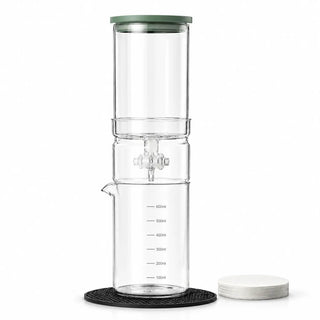
The slider-controlled cold-drip brewer has a 450 ml upper chamber and a 650 ml carafe. Its guide suggests 7–8 drops per 10 seconds as a starting point. The 600 ml glass tower uses its own chamber and flow guidance; compare recipes and filtration, not just the carafe numbers.
Body: where immersion often feels stronger
Body is weight and texture rather than flavor. Immersion tends to feel broader because the grounds steep as one mass and because most mesh infusers let a little fine material and some oil through into the finished drink. That is not a defect. It is most of the reason cold brew feels like cold brew.
Taste each coffee with the amount of milk you normally add. A concentrated or fuller-textured batch may suit that serving, while excess sediment can feel gritty.
The 450/600 ml infuser bottle uses a removable internal filter, and 12–18 hours in the fridge is the range worth starting from. Taking the infuser out on schedule is half the flavor control you have.
Sweetness, bitterness and acidity
Neither method uses hot water, and neither one guarantees a sweet, low-acid cup. Dark roasts, high concentration, old residue in the mesh, an over-long steep and serving temperature all push a cold coffee toward bitterness regardless of how it was brewed.
Brightness, body and sweetness depend on the coffee and recipe. Use those words to describe what you taste, rather than assigning them to the method in advance.
Dilute concentrate before comparing it with a ready-to-drink batch. Otherwise strength may dominate your preference.
How to run a fair side-by-side tasting

Use the same coffee
Open one bag and split the dose. Choose a coffee you know well so you have a familiar flavor to compare. Grind fresh for each brew and use the setting each method needs rather than forcing an identical number — cold drip wants a slightly different grind from a 16-hour steep. If you are still working out which beans suit cold coffee at all, roast date and origin are useful details to consider alongside your preferred flavors.
Keep water and serving temperature consistent
Use the same water source and chill both samples to a similar temperature before tasting.
Match final strength by taste or measured dilution
Write down coffee weight, water weight and finished yield for both. If the immersion batch was brewed as concentrate, dilute it before the comparison and record the ratio. Two cups that feel similar in strength let you focus on what you are actually judging: clarity, body, sweetness, finish, sediment.
Taste blind
If possible, have someone place the cups without telling you which is which. Write down what you notice in your own words; “smoother” is useful if you can explain what feels different.
Repeat with milk only if that is how you drink it
Then compare equal portions with the same amount of milk. Your preference in your everyday drink matters as much as the black-coffee tasting.
Which coffees suit ice drip?
Try ice drip if you want to explore a coffee's aroma and are willing to work on flow and bed preparation.
Consider whether you enjoy checking the flow during brewing. If you prefer a batch with less attention during extraction, immersion may fit your routine better.
Which coffees suit immersion cold brew?
Immersion can suit a batch prepared ahead with little attention during steeping. Set a reminder to remove the grounds at the planned endpoint.
Use a grind suited to the filter and remove the grounds on time. Filter again if excess sediment bothers you.
Which tastes better for you?
Choose from the tasting and the work involved. You do not need both brewers unless you enjoy both routines.
For the equipment and timing side of the comparison, cold drip and cold brew differ in more than flavor. This guide stays on what reaches the glass.
Compare your tasting notes
Keep the notes from the comparison and choose the method you want to repeat. The result in your own glass is more useful than a universal winner.