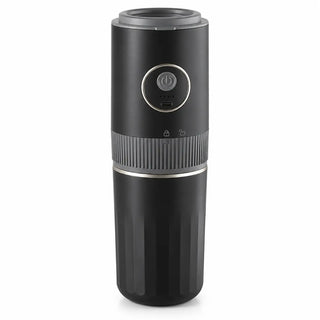
A portable coffee grinder and brewer combines useful pieces, but check the whole packing list. You may still need a cup, hot-water source, cable, coffee container and cleaning supplies. Compare the complete kit rather than its product photograph.
Choose the serving and brewing method first. Then check whether the water supply, charging and cleanup fit the places you stay.
The Yozcoffee 4-in-1 portable grinder and brewer combines grinding and reusable-filter brewing with a serving cup. It requires separately heated water, so include that source when planning where to use it.
First decide what “portable” means for your trip
A fitted case may be convenient in a car but bulky in a small bag. For a digital nomad, balance transit weight with how often the equipment will be used during each stay.
Write down the tightest constraint you actually expect:
- Carry-on travel: packed volume, weight, spill control, and gear that survives being pulled out at security.
- Road trips: fast setup at a rest stop, storage that does not slide around, and a hot-water plan that does not depend on finding a café.
- Hotels: check grinding noise, usable work space, hot-water access and somewhere to rinse and dry the parts.
- Office use: noise at 9 a.m. in an open-plan room, dry storage in a drawer, and a mug that fits under the brewer.
- Camping: weather, a thermos or a stove, waste you have to pack out, and a manual fallback when the battery dies.
Choose for the trips you make regularly and identify any requirement you cannot work around.
Check Size, Brewing, Water, Power and Cleaning
Measure the complete packed system
Measure the full packed kit, including accessories and coffee. Add a hot-water source if the destination cannot provide one.
The listed integrated unit is about 80 × 80 × 245 mm and 0.7 kg. Compare that with the whole alternative kit, including a manual burr grinder if you want fresh grinding.
Check how wet and dry parts are kept apart. Coffee-contact pieces should be dry before packing near the motor or charging cable.
Match the grinder to filter coffee, not to the marketing label
A grinder is useful only when its adjustment range covers what the brewer needs. For portable pour-over, you want medium to medium-coarse with enough steps either side to fix flow. If flow is slow and the cup tastes harsh, try a small coarser adjustment. If it runs quickly and tastes thin or sour, try finer. Use the brewer's guidance and your own results rather than a fixed time cutoff. Numbered or clicked settings matter here, because after cleaning you need to get back to the setting that worked.
Check the adjustment range, step size and how reliably you can return to a previous setting. More listed settings do not by themselves establish grind quality or suitability for a brewing method.
Check how you remove or transfer the grounds. An integrated path reduces handling, while a catch cup can offer more flexibility. Match hopper capacity to your usual dose.
Confirm the brewing method and cup volume
Check the actual brewing mechanism. A gravity filter makes filter coffee; an espresso-style brewer needs a pressure system. Choose according to the drink you want.
Cup volume and brewing output are separate figures. Check the recipe capacity and leave room in the cup for carrying or adding water or milk. For two people, count the time for a second cycle.
Paper contains the grounds and usually gives a clearer cup. Reusable mesh needs rinsing and allows more fine sediment through. Pick the texture and cleanup you prefer.
Plan hot water before you buy
Confirm whether the device heats water or only powers grinding and brewing. If it needs preheated water, identify the source before ordering.
Ask accommodation about water-heating facilities. For a road stop, test an insulated bottle over the time you expect to carry it. In an RV, use approved equipment and stow it securely after cooling.
A 550 ml portable travel kettle can provide hot water where suitable power is available. Confirm the destination's voltage, plug requirements and appliance rules before adding it to the kit.
Compare the 400 ml and 550 ml electric travel kettles if heating water is the missing step. Their capacity, supplied accessories and power options differ.
Battery, cable, and manual fallback
For an electric grinder, check four things: the connector, the charge time, the approximate number of grinds per charge, and whether it runs while plugged in. USB-C cuts down on cables, though a USB-C port does not mean every charger and fast-charge profile is supported — use what the manual specifies.
Treat the listed battery capacity, charging time and grinds per charge as planning information. Actual runtime can vary with dose, grind, coffee and battery condition. Test your usual recipe before relying on one charge for a trip.
A manual grinder avoids dependence on charging, but grinding time and effort vary by model, dose, grind and beans. Compare those factors with your own comfort before choosing it for several servings.

Cleaning is part of portability
Look for a removable filter, accessible cup and seals that are easy to clean. Check that washable pieces separate from the electrical body.
The manual should identify which parts are washable and how to brush the grinder. Ask for clarification before buying if those instructions are unavailable.
Grounds disposal deserves a thought before you travel, not after. In a hotel, let them cool, knock them into a lined trash can, then wipe the filter before you rinse it, because 20 g of wet coffee going down a small basin sink is how you end up apologizing to housekeeping. At a campsite, follow the posted rules and pack the grounds out where required.
A practical buying checklist
Before ordering, confirm all of the following:
- The brewer makes the coffee style you actually drink.
- The full kit fits the bag, drawer or cabinet you will be using.
- Packed weight includes cup, cable, case, coffee and the hot-water solution.
- Grinder settings cover the brewer's useful range, with steps either side.
- Bean and cup capacity match the number of people drinking.
- Hot water is available safely at the destination, and you can say where.
- Battery life covers the trip with margin, or the grinder is manual.
- Coffee-contact parts come out easily for rinsing.
- The powered body can be cleaned without immersion.
- Wet and dry parts can be stored apart after use.
Which type should you choose?
An integrated electric unit may suit one-cup brewing where hot water is available and you prefer not to grind by hand. Confirm the accessories and capacity rather than assuming everything needed is included.
Choose a separate manual grinder and dripper if you want parts you can replace individually, more than one brew method, or a lighter pack. For a manual kit that keeps its pieces together, the 6-piece portable pour-over set holds a ceramic-burr grinder, a 250 ml pouring kettle, a reusable steel dripper, a 280 ml cup, a bean canister and a scoop in a fitted case. Its kettle controls the pour and does not heat the water.
Before ordering, check how you will heat water, charge the grinder and dry the washed parts. Compare the complete setup with other options in the coffee anywhere collection.